The existing roof window had gotten old and a bit worn out. I wasn’t completely satisfied with its design, because I couldn’t simply open it for ventilation. Instead, I had to force it into the guide rail which increasingly wore down the frame over time. It also had only a thin plexiglass pane, offering poor insulation and causing a large cold bridge where condensation formed in winter. What bothered me most was the lack of any mechanism to secure the window during driving or during strong storms. The improvised tension strap I used to fasten the window to the bed was annoying and didn’t look good either.
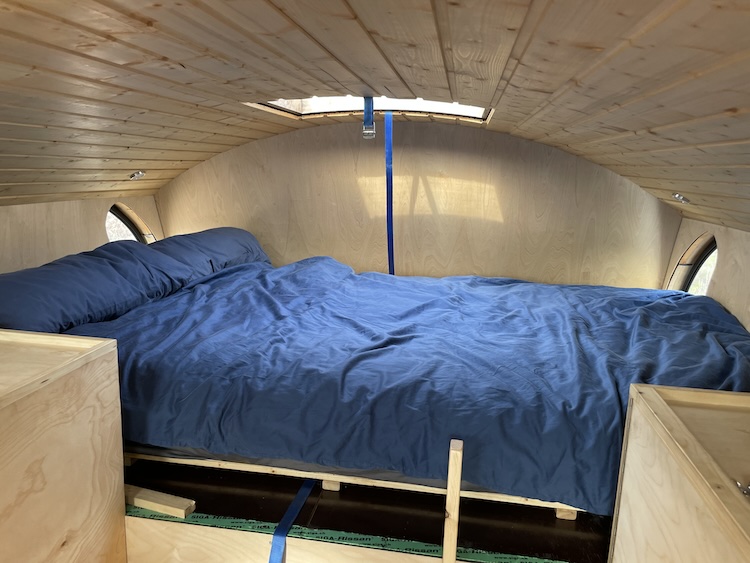
It was time to build a new, improved version: double-glazed, with a proper opening mechanism and a locking system.
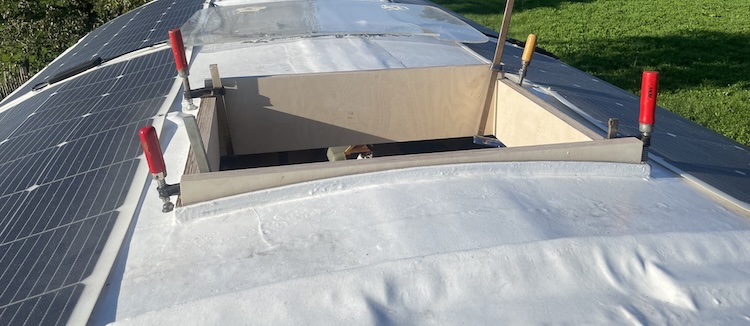
First, I cut the side pieces of the base frame to size and marked the curve of the roof.
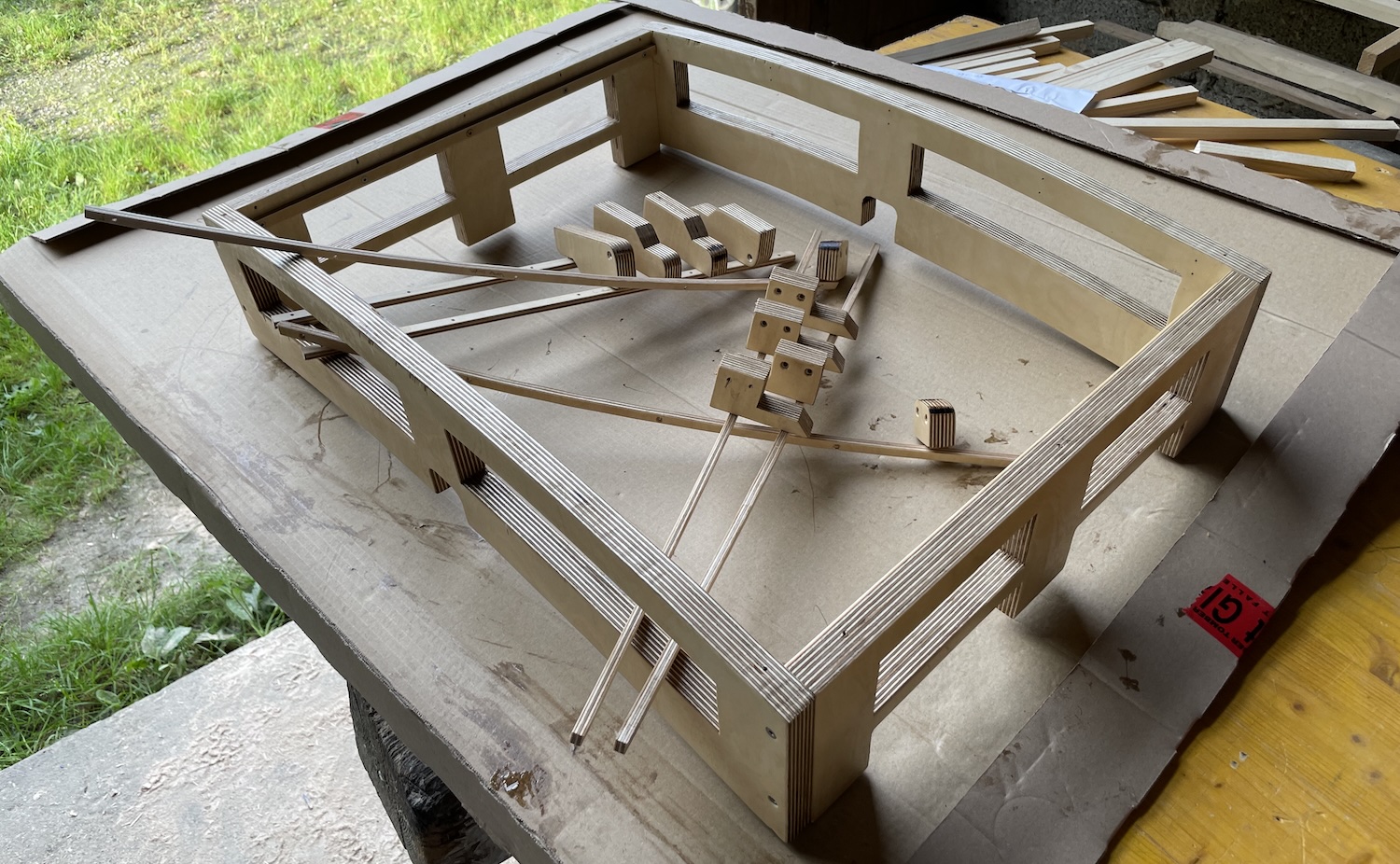
Next, I built all the parts, sanded them smooth, and treated them with oil.
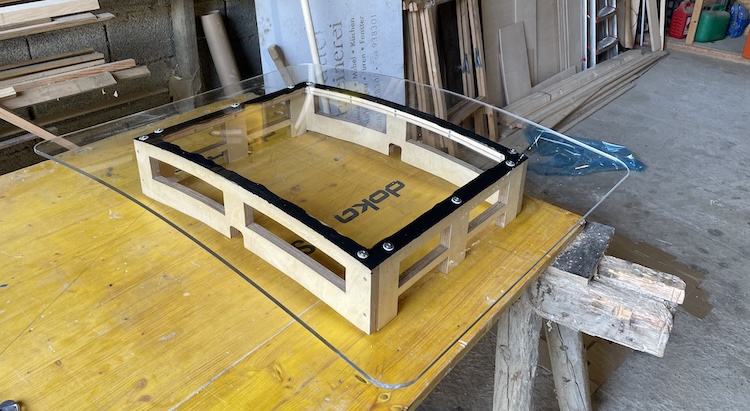
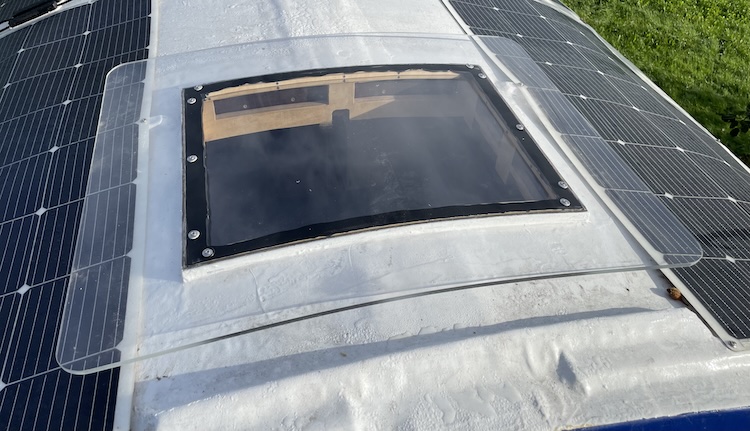
Inside the completed frame, I fitted a plexiglass pane, then added a thicker pane that extended well beyond the frame to offer structural protection against the weather.
With a slight clearance on all sides, the construction fit perfectly into the roof hatch.
Inside, the window rested on the opening and securing mechanism.
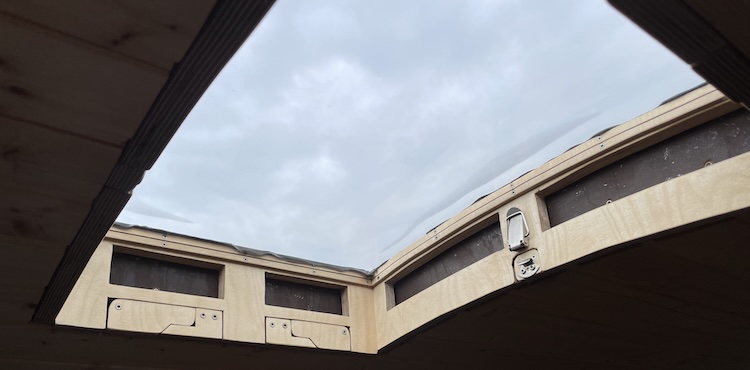
Two toggle latches on both sides allowed the window to be firmly secured, preventing it from opening during travel or in heavy winds.
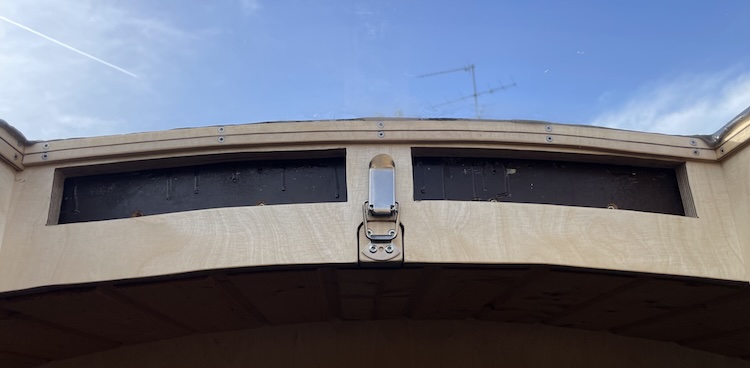
To ventilate, the window could be lifted and set on the opening mechanism. The generous overhang of the outer plexiglass pane allowed for ventilation even in light rain, keeping water out of the sleeping area.
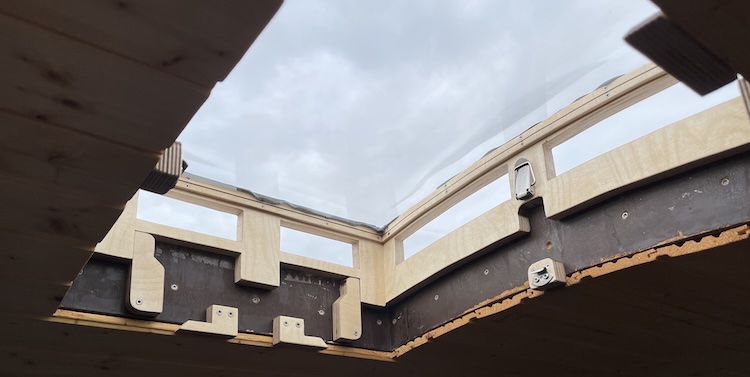
After being bothered by mosquitoes, I added fly and mosquito screens to the openings.
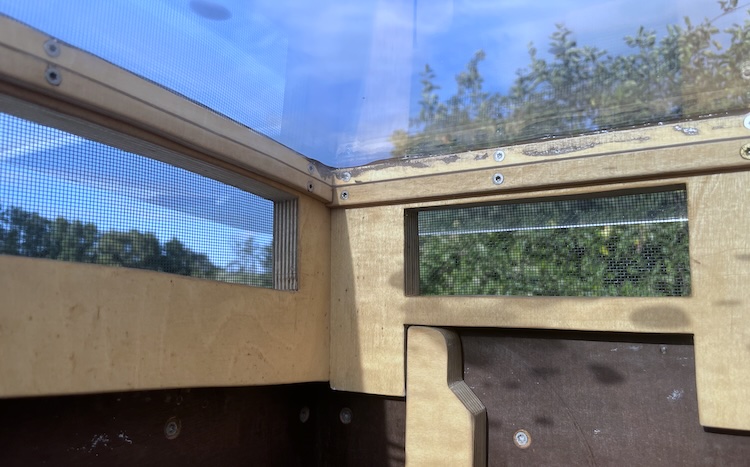
From then on, I could comfortably enjoy fresh air while lying in bed.